
If you’re reading this, life probably feels pretty chaotic right now. A breakup turns everything upside down—where you live, how you parent, your finances, and your future.
On top of all that emotional fallout, someone probably told you: “Get a solicitor, take them to court.”
Before you spend thousands of pounds letting strangers in wigs decide your life, take a breath. Family court isn’t built to heal relationships or solve day-to-day problems; it’s built to argue.
Online family mediation is the alternative. It’s practical, private, and you can do it from your sofa. Here is an honest, no-jargon breakdown of how it works and whether it can actually help your situation.
What Exactly Is Online Family Mediation, and How Does It Keep You Out of Court?
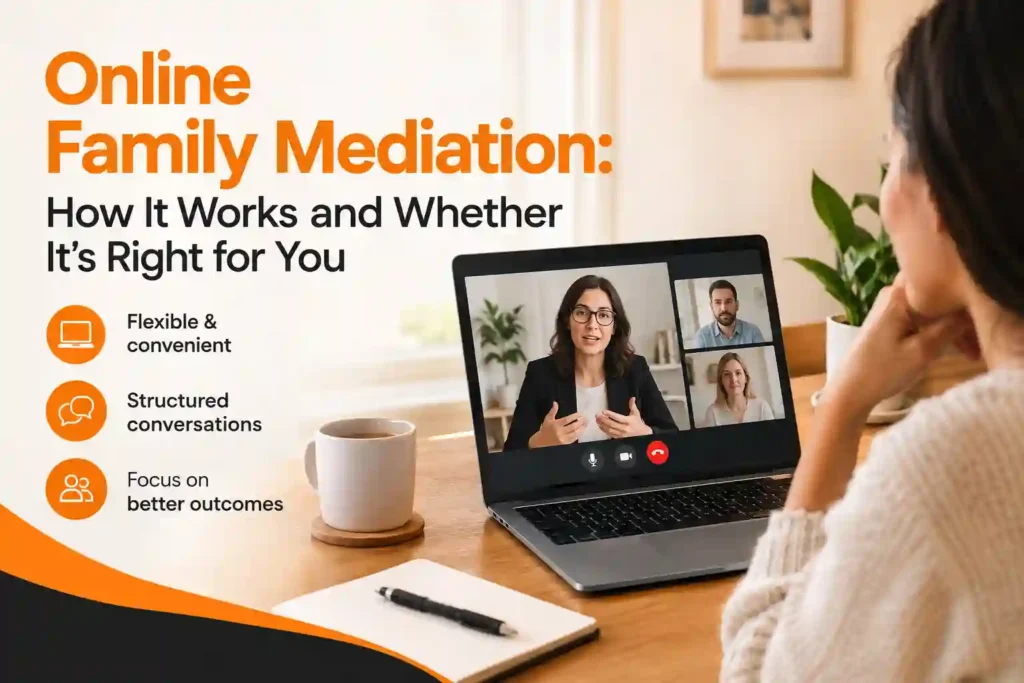
Online family mediation Coleford is simple: you, your former partner, and an independent mediator meet over secure video calls to sort out your separation.
A mediator is there to help you talk things through, not to judge either of you. They won’t take sides or ask you to explain why the relationship ended. Instead, they help you discuss the things you need to sort out, whether that’s arrangements for the children, money, or what happens next. The decisions are yours to make, but you don’t have to work through every difficult conversation on your own. Also Read: Self-Employed and Separating? How Financial Disclosure Works in Mediation
In court, a judge makes the final call. They don’t know your kids’ bedtime routines, your work hours, or what really matters to you.
Mediation puts the steering wheel back in your hands. You keep control of your decisions, keep your private life out of the public record, and avoid the months of toxic back-and-forth letters that usually come with court battles.

Can You Really Resolve High-Conflict Parenting and Financial Disputes Over Video?
Most people think, “We can’t even agree on who picks up the kids without screaming at each other. How is an Online Family Mediation going to fix our mortgage and pension?”
Surprisingly, a computer screen often helps where sitting in the same room fails:
- Physical space lowers the tension. You aren’t sitting three feet away, feeling someone’s anger across a mahogany boardroom table. You’re in your own familiar space, with your own cup of tea.
- No talking over each other. The mediator manages the call. If conversations start running hot, they step in immediately.
- You can take breathers. If you feel yourself getting overwhelmed or teary, you can turn your camera off, take five minutes to regroup, and come back when you’re ready.
- Direct screen sharing. Instead of paying solicitors £300 an hour to mail letters with attached bank statements, you put the spreadsheets on screen together. Everyone sees the same numbers at the same time.
Whether it’s working out who gets alternate Christmases or splitting a pension pot, breaking issues into structured video meetings makes huge problems manageable.
Step-by-Step: What Actually Happens from Your First Assessment to a Final Agreement?
Uncertainty makes an already stressful situation worse. Here is the actual roadmap from start to finish:
- Your Private 1-on-1 Chat (MIAM): Before any joint meeting happens, you have a private call with the mediator. This is called a Mediation Information and Assessment Meeting. Your ex isn’t on this call. It’s your chance to speak freely, explain your side, and make sure mediation is safe and appropriate for your circumstances.
- Joint Video Sessions: If you both agree to proceed, you schedule your joint sessions. These are usually 90 minutes each. You’ll tackle an agenda you agree on beforehand—whether that’s sorting child maintenance, holiday schedules, or what happens to the house.
- Getting the Facts on the Table: Between meetings, both of you gather any needed paperwork—house valuations, bank statements, or school schedules. Everything stays open and honest.
- Drafting the Agreements: Once you find compromises that work, the mediator puts everything into clear, written summaries:
- Memorandum of Understanding: A detailed write-up of everything you’ve agreed regarding your parenting arrangements and living situations.
- Open Financial Summary: A factual statement showing both of your assets, debts, and income.
- Making It Official: Mediation agreements aren’t automatically legally binding. But with these documents in hand, you take them to a solicitor who turns them into a Consent Order. A court then approves it on paper—no court appearance, no drama.

Safety, Privacy, and High-Tension Dynamics: What if You Don’t Want to Be on the Same Screen?
If the separation has been bitter, or there’s a history of intimidation, seeing your ex on a screen can make your stomach drop.
You don’t have to share a screen. This is what Virtual Shuttle Mediation is for:
- Separate Private Rooms: You and your ex log into completely separate digital rooms. You never see or hear each other, and you never interact.
- The Mediator Moves Between You: The mediator talks through an issue with you, takes your thoughts, pops into your ex’s room to talk with them, and comes back to you with their response.
- Time to Think: While the mediator is in the other room, you have time to breathe, think about what was just said, and figure out your next move without feeling pressured.
Every session follows clear safety rules. Recording is not allowed, no one can join off-camera without permission, and aggressive behaviour will not be tolerated.
How Much Time and Money Does Online Family Mediation Actually Save Compared to Solicitors?
Litigation bleeds people dry—both emotionally and financially Coleford. When two solicitors argue over every text message or bank account detail, the clock keeps running. Check This Also: How Mediation Supports Intercultural Families Navigating Different Expectations
| The Reality | Going to Court via Solicitors | Using Online Family Mediation |
| Typical Costs | Easily £10,000 to £25,000+ each | A fraction of litigation costs (often 70–80% less) |
| Time to Resolve | 12 to 18 months of ongoing stress | Usually done in 4 to 8 weeks |
| Logistics | Missed work days, travel, sitting in court hallways | 90-minute video calls fitted around your daily schedule |
| The Result | Win/lose mindset; co-parenting is damaged | Compromise; you can still talk to each other as parents |
Spending life savings on legal fees means that money isn’t there for your new home or your children’s future. Mediation keeps the money in your pocket.

Is Online Family Mediation Right for Your Situation (or Is It Time for Another Route)?
Mediation solves most family disputes, but it isn’t magic, and it isn’t for everyone.
Mediation may work for you if:
- You’re both willing to sit down and try to work things out, even if you don’t agree on everything.
- You don’t want your children caught in the middle of arguments or disagreements.
- You want to make decisions about your home, money and children together, instead of having a judge make those decisions for you.
- You need a way to sort things out that fits around work, school runs and looking after the children.
You should look at other options (like solicitors or court orders) if:
- There is ongoing domestic abuse, violence, or severe coercive control making you feel unsafe.
- One person is actively hiding money, selling off assets behind your back, or lying about income.
- There is an immediate risk to a child’s safety.
- The other person flat-out refuses to join the conversation.
During your first private meeting, a good mediator will tell you straight away whether mediation makes sense for you. If it doesn’t, they will tell you. Also explore: Mediating Joint Debts and Shared Liabilities After Separation
Why Families Trust EH Mediation to Guide Them Forward
A breakup is one of the hardest things you will ever live through. Hostile letters and courtrooms don’t need to make it worse.
At EH Mediation Coleford, we keep things grounded, calm, and focused on solutions:
- Straight Talk, No Blame: We don’t take sides or pick fights. We help you cut through the anger and focus on what tomorrow looks like.
- Built Around Your Comfort: Whether you’re okay sharing a screen or you need virtual shuttle mediation with zero contact, we make sure you feel secure throughout.
- Paperwork That Works: We provide clear, detailed paperwork your solicitor can use to draft a legally binding Consent Order without red tape.
- Upfront, Clear Costs: No confusing hourly retainers or shock bills at the end of the month. You know what you’re paying from day one.
You don’t have to let a broken relationship destroy your peace of mind. With the right support, you can sort out the details, close this chapter, and start fresh.

Frequently Asked Questions
Q: What if my ex refuses to be on the screen with me?
You don’t need to see them. With our virtual shuttle mediation, you sit in your own private video room. The mediator moves between you and your ex, carrying messages and proposals back and forth. You never have to interact directly.
Q: Are the agreements we make legally binding right away?
No, not on the day you sign them. The mediator puts together a Memorandum of Understanding and a clear summary of the financial information shared during mediation. You then hand these to a solicitor, who turns them into a formal “Consent Order” for a judge to sign. Once signed, it is completely legally binding.
Q: What equipment do I need?
You don’t need any special equipment to get started. All you need is a smartphone, tablet or laptop with a working camera and microphone, plus a reliable internet connection. Just find a quiet, private space where you can speak freely without being overheard. Your calls are encrypted to help keep your conversations secure and confidential.
Q: How many sessions does this actually take?
We often sort child arrangements in 1 to 2 sessions. Sorting out money, property, and pensions usually takes 2 to 4 sessions, depending on how fast you both gather your documents. We don’t drag things out.
Q: What happens if we try EH Mediation Coleford and still can’t agree?
You haven’t lost anything. Mediation is voluntary. If you can’t agree, your mediator signs the court form (like a MIAM certificate) confirming you tried mediation. You can then proceed with a formal court application if you have to.
Q: Can we sort out the kids and the house at the same time?
Yes. That’s called “all-issues mediation.” We can work out where the kids stay during holidays and school terms, along with how to split the house, debts, and pensions, in the same process.
For Further Information, Please Contact Us